Studio Window No. 11
How to choose fonts for your wellness brand
ELYSA - ERANOVA DESIGN JUNE 29 2026 14 MIN READ FREE WORKSHEET INSIDE
Before anyone reads your tagline, before they land on your services page, before they even register your logo, they have already felt something about your brand. That feeling comes almost entirely from your fonts.
Typography is the most underestimated brand decision a wellness practitioner makes. It is also one of the most permanent. Your fonts show up everywhere. On your website, your business cards, your social graphics, your email headers, your products. Every time someone encounters your brand they are encountering your typography first.
And yet most wellness brands choose fonts the way people choose wallpaper. They find something that looks nice and they use it. Without thinking about what it communicates. Without thinking about whether it matches the feeling they want to create. Without thinking about whether it will still feel right in three years.
This post covers everything you need to know to choose fonts that actually serve your wellness brand. What the four font categories communicate. The two-font rule that makes wellness brands look professional. How to pair fonts so they work together. The mistakes that make wellness brands look inconsistent. And where to find good fonts, free and paid.
— WHY FONTS COMMUNICATE BEFORE WORDS DO —
Your fonts are already saying something. The question is what
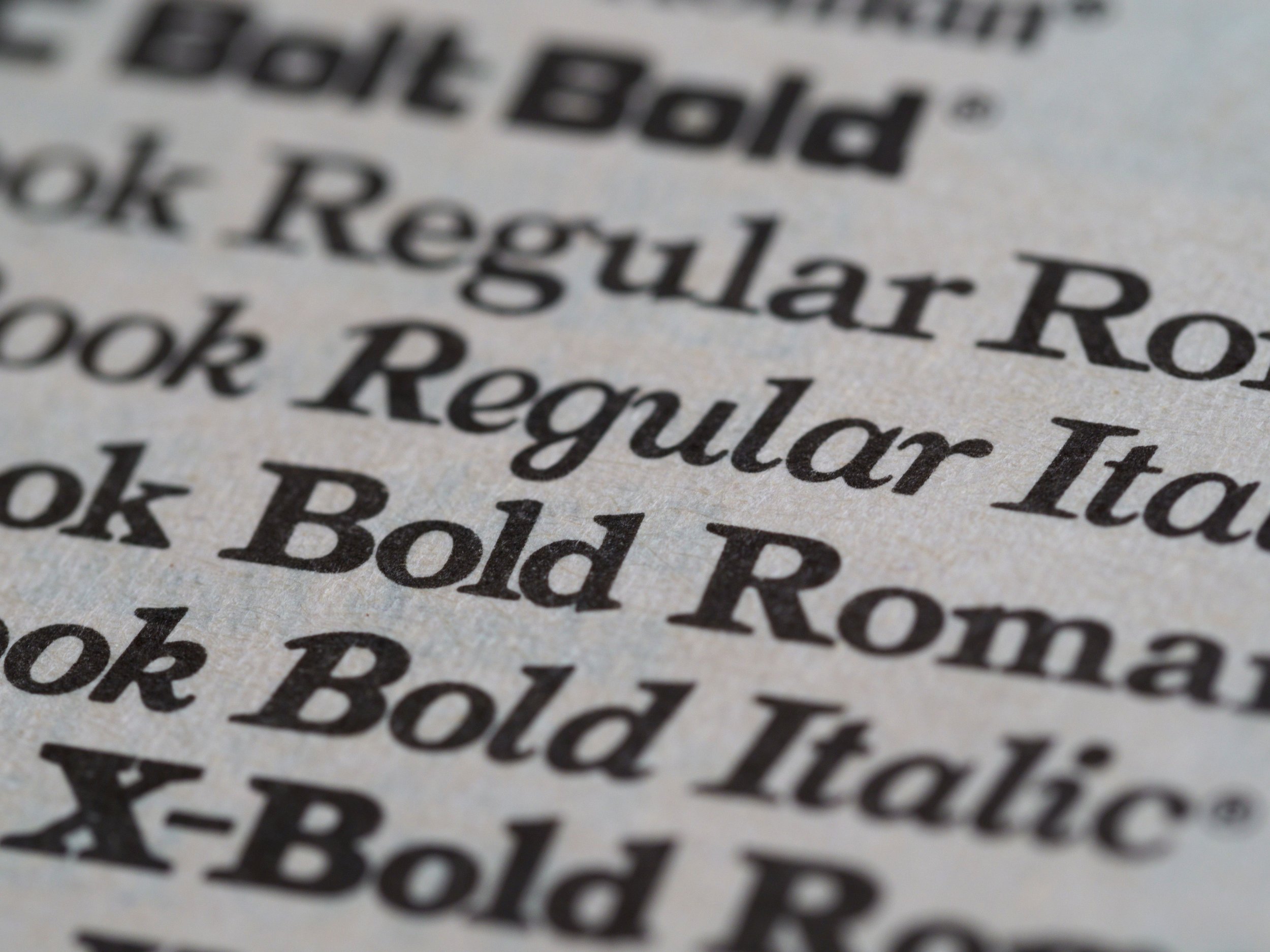
Humans process visual information before linguistic information. Before your reader consciously processes the words on your page, their brain has already formed an impression of your brand based on the shapes they are seeing. Font shapes are processed as visual signals before they are processed as words.
A thick, blocky font communicates strength, stability, and groundedness. A thin, delicate serif communicates refinement, calm, and elegance. A handwritten script communicates warmth, approachability, and intimacy. A geometric sans-serif communicates clarity, modernity, and precision.
None of this is accidental. Type designers understand what different letterform shapes communicate, and they design accordingly. When you choose a font for your wellness brand you are choosing what feeling to create before a single word is read.
“Your fonts are communicating something before your client reads a single word. The question is whether what they are communicating is what you intend.”
— THE FOUR FONT CATEGORIES —
The four font categories and what they communicate
Every font belongs to one of four categories. Understanding what each category communicates will help you make a more intentional choice for your wellness brand.
Letters with small decorative strokes at the ends of the main strokes. They communicate tradition, trust, elegance, and refinement. For wellness brands, serifs work well when you want to feel grounded, established, and considered. Cormorant Garamond, Playfair Display, EB Garamond, and Lora are all examples worth knowing.
Letters without decorative strokes. Clean, modern, and easy to read at small sizes. They communicate clarity, accessibility, and professionalism. For wellness brands, a light-weight sans-serif reads as calm and intentional rather than corporate. The weight matters enormously here. A heavy sans-serif reads very differently from a light one. Montserrat Light, DM Sans, and Nunito are all worth exploring.
Fonts that mimic handwriting or calligraphy. They communicate warmth, personality, and human connection. For wellness brands they can be beautiful as accent fonts in small doses. The risk is legibility. A script font that cannot be read at 14px on a phone screen is not serving your brand. Use these as display elements only, never for body text.
Fonts designed specifically for large sizes, headlines, and visual impact. They carry strong personality and work as a single signature element. For wellness brands, display fonts work well for a brand name or a single headline, then step aside for something more readable in the body of the page.
— THE TWO FONT RULE —
The rule that makes wellness brands look professional
- Use two fonts and no more. One for display and headlines. One for body copy and supporting text.
- Two fonts can create all the visual hierarchy you need when you contrast them in size, weight, and style.
- Adding a third font almost always creates visual noise rather than adding personality.
- The one exception is a very occasional accent font appearing in a single specific context, such as a brand name on a printed piece. On a website, two fonts every time.
- If you feel the urge to add a third font, ask what job it is doing that your first two cannot do. The answer is almost always nothing.
— HOW TO CHOOSE YOUR FONTS —
The five-step process for choosing fonts that actually work
Choosing fonts is not about finding something beautiful. It is about finding something that communicates the right thing and functions reliably across every platform where your brand appears. Here is the process that makes that possible.
Before you open Google Fonts, write down three words that describe how you want people to feel when they encounter your brand. Grounded. Calm. Luxurious. Approachable. Bold. Healing. These words should guide every font decision you make. If a font does not create the feeling on your list, it is not right for your brand regardless of how much you like it.
Your display font is the one that carries the most personality. It shows up in your logo, your headlines, and your key brand moments. This is where your brand identity lives typographically. Choose it before you choose your body font. It is easier to find a body font that supports a display font than the other way around.
Your body font should be almost invisible. Its job is to be easy to read and to let your content communicate clearly. It should contrast with your display font in weight and style without clashing. If your display font is an elegant serif, your body font might be a clean light sans-serif. The classic pairing for wellness brands is Cormorant Garamond for display and Montserrat Light for body.
A pairing that looks beautiful in a font preview may fall apart at the sizes you actually use. Test your headline font at 48px and your body font at 16px before you commit. Then test them together on a simple mockup of your home page hero. What looks good in a preview tool and what works on a real web page are often very different things.
Your fonts need to be readable on screen at small sizes, especially your body font. Test your body copy at 14px on a mobile screen. If it requires effort to read, the font is not right for body copy regardless of how beautiful it is. Accessibility is not a design afterthought. It is part of the brand experience. A client who cannot easily read your website will not stay on it.
— FONT PAIRING RULES —
How to pair fonts so they work together
Contrast is the key principle of font pairing. Fonts that are too similar to each other create visual tension without creating hierarchy. Fonts that contrast clearly create hierarchy without visual conflict.
The classic pairing for wellness brands is an elegant serif for display and a light sans-serif for body. Cormorant Garamond and Montserrat. Playfair Display and DM Sans. EB Garamond and Lato. These pairings work because the serif carries warmth and personality while the sans-serif carries clarity and readability.
- Pair a serif display font with a sans-serif body font for the most reliable wellness brand combination.
- Contrast in weight as well as style. A heavy display paired with a light body creates clear hierarchy.
- Avoid pairing two serifs or two sans-serifs unless you have a specific reason and know exactly what you are doing.
- The pairing should feel like a conversation, not a competition. One font leads, one supports.
- Test the pairing in a real context, not just in a font preview tool.
- Document your final pairing with exact font names, weights, and sizes so you can apply it consistently everywhere.
— THE MOST COMMON MISTAKES IN WELLNESS BRANDING —
The mistakes that make wellness brands look inconsistent
— WHERE TO FIND GOOD FONTS —
Where to find fonts that actually work for wellness brands
You do not need to spend money on fonts to build a professional wellness brand. There are excellent free options available. But where you find your fonts matters because font licensing affects what you can use your fonts for commercially.
- Google Fonts — fonts.google.com — the most reliable source for free fonts with open commercial licensing. For wellness brands, explore Cormorant Garamond, Playfair Display, EB Garamond, Lora, Montserrat, DM Sans, Nunito, and Raleway.
- Adobe Fonts — fonts.adobe.com — included with any Adobe Creative Cloud subscription. Enormous library of professional quality fonts with clear commercial licensing.
- Canva Font Library — built into Canva for Canva users. Viable if Canva is your primary design tool but you will be limited to fonts available within Canva, which may not match fonts you use elsewhere.
- Font Squirrel — fontsquirrel.com — curated free fonts specifically licensed for commercial use. A useful alternative to Google Fonts with some options you will not find elsewhere.
- Creative Market — creativemarket.com — paid fonts typically sold as individual licenses. Worth exploring if you want something more distinctive than what Google Fonts offers.
One important note on font licensing. If you are using a font on products you sell, such as templates, printables, or physical products, the font needs a commercial license. Always check the license terms before using any font commercially. Google Fonts are all open source and safe for commercial use. Other sources vary.
The How To Series Workbook 02 brings the full font guide together with deeper exercises and a complete brand typography system. Coming soon to Gumroad.
Browse the collection